Smart Tire Check Guide

Finnegan Flynn
| 07-07-2026
 · Vehicle Team
Tires are the only components of a vehicle that maintain continuous contact with the road, making their condition essential to safe and efficient driving.
Despite their importance, tire inspections are often overlooked during routine vehicle maintenance. Regular tire checks require only a few minutes but can significantly improve safety, enhance fuel efficiency, extend tire life, and support consistent vehicle performance.
Understanding the key aspects of tire inspection and performing them regularly helps reduce unnecessary wear, identify potential issues early, and maintain reliable operation throughout the life of the tires.
Safety Begins with Proper Tire Condition
Each tire contacts the road through a relatively small surface area, approximately the size of an adult's hand under normal driving conditions. This small contact patch is responsible for transmitting steering, braking, and acceleration forces while maintaining vehicle stability.
When tire pressure is too low, excessive heat builds up inside the tire, accelerating wear and increasing the likelihood of tire damage. Excessively high tire pressure may reduce the tire's contact with the road, resulting in reduced traction and a firmer ride. Maintaining the recommended tire pressure helps optimize handling, braking performance, and overall driving stability.
Checking tire pressure regularly remains one of the simplest and most effective vehicle maintenance practices.
Improving Efficiency and Extending Tire Life
Proper tire inflation contributes to better fuel efficiency by reducing rolling resistance, allowing the vehicle to move more efficiently with less engine effort. Depending on the vehicle, tire condition, and driving environment, maintaining the recommended tire pressure may improve fuel efficiency by approximately 3%.
Correct tire pressure also promotes even tread wear. Tires operated at incorrect pressure levels tend to wear unevenly, reducing their service life and increasing replacement costs. Routine inspections help maximize tire longevity while maintaining consistent driving performance.
Essential Tire Inspection Checklist
A complete tire inspection should include several important checks.
Begin by measuring tire pressure with a reliable tire pressure gauge while the tires are cold, ideally before driving or after the vehicle has remained parked for several hours. Always follow the recommended tire pressure listed on the driver's-side door label or in the vehicle owner's manual rather than the maximum pressure printed on the tire sidewall.
Next, inspect tread depth to ensure sufficient grip remains. A simple coin test can provide a general indication of tread condition, although a tread depth gauge offers greater accuracy.
Carefully examine each tire for uneven tread wear, which may indicate improper inflation or wheel alignment concerns. The tire surface should also be inspected for cuts, bulges, cracks, or embedded objects that could affect safe operation.
These inspections should be carried out at least once each month and before every extended journey.
Seasonal Tire Maintenance
Ambient temperature directly affects tire pressure. For approximately every 10°F (5.6°C) change in air temperature, tire pressure changes by about 1 PSI. Lower temperatures typically reduce tire pressure, while higher temperatures increase it. Regular pressure checks are therefore especially important during seasonal weather changes.
In regions that experience prolonged snow and freezing temperatures, winter tires are engineered to remain flexible in cold conditions, providing improved traction compared with standard all-season tires.
Routine tire rotation every 5,000 to 8,000 miles (8,000 to 13,000 kilometers), or according to the vehicle manufacturer's maintenance schedule, helps distribute wear evenly and extends overall tire service life.
Remember the Spare Tire
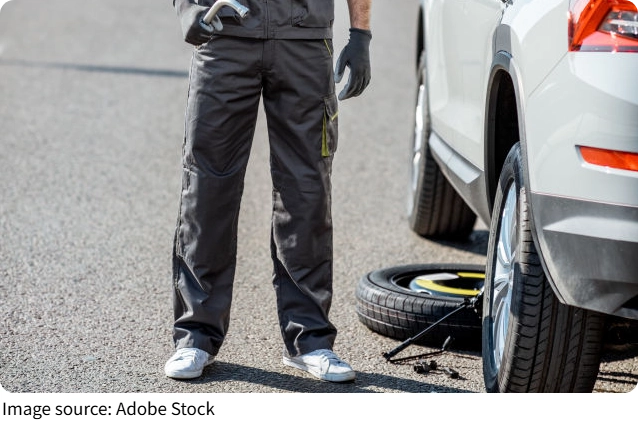
The spare tire should be included in every maintenance routine, even though it is used infrequently. Check its inflation pressure at least twice each year and inspect it for signs of aging, cracking, or visible damage.
Keeping a portable tire inflator and basic emergency equipment in the vehicle further improves preparedness for unexpected roadside situations.
Regular tire inspections are among the most valuable preventive maintenance practices for any vehicle. By monitoring tire pressure, tread condition, wear patterns, and overall tire health, drivers can improve safety, increase operating efficiency, extend tire lifespan, and maintain dependable vehicle performance.
Incorporating a brief tire inspection into a monthly maintenance routine and before long-distance travel is a practical habit that supports safer, smoother, and more efficient driving over the long term.