Smart Motorcycle Safety Tech

Owen Murphy
| 06-07-2026
 · Vehicle Team
You know that heart-dropping moment when a car suddenly cuts in front of a motorcycle and everything feels like it slows down for a second?
That exact kind of situation is what modern safety technology is being designed to reduce. Motorcycles have always represented freedom on the road, offering an open and direct riding experience.
However, without physical protection around the rider, even small mistakes in traffic can lead to serious consequences. This is where collision avoidance technology is becoming increasingly important, helping riders stay more aware of their surroundings.
What Is Anti-Collision Technology?
Anti-collision systems are designed to help detect nearby vehicles and potential hazards in real time. They typically use a combination of radar sensors and cameras to monitor the environment around the motorcycle. Some systems may also use additional sensing technologies depending on design and application.
These systems continuously measure distance, relative speed, and movement patterns of surrounding vehicles. The data is processed in real time to identify possible collision risks and support rider awareness.
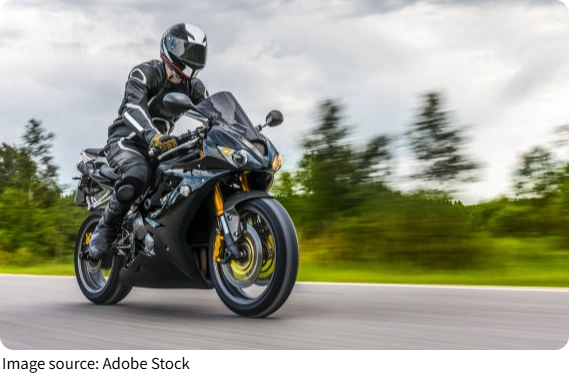
Warning and Assistance Systems
One of the most common features is Forward Collision Warning. When the system detects that a rider is approaching another vehicle too quickly, it provides alerts through visual signals on the display, sound alerts, or vibration feedback.
Blind Spot Detection helps monitor areas that are difficult to see directly, such as behind or beside the motorcycle. When another vehicle is detected in these zones, a warning indicator is activated to improve awareness during lane changes.
Lane Change Assistance works alongside blind spot monitoring by alerting the rider when a lane change may be unsafe.
Rear Collision Warning systems can also detect fast-approaching vehicles from behind and provide alerts, improving awareness in high-traffic situations.
Automatic Emergency Braking (AEB)
Automatic Emergency Braking is an advanced safety feature designed to support riders in critical situations. If a potential collision is detected and no action is taken in time, the system may apply controlled braking assistance.
Because motorcycles require balance and stability, these systems are carefully engineered to apply braking in a controlled and coordinated way. The goal is to support rider control while reducing the severity of possible impacts.
Adaptive Cruise Control
Adaptive Cruise Control helps maintain a safe following distance from vehicles ahead. Unlike traditional cruise control, it automatically adjusts speed based on traffic conditions.
If traffic slows down, the system reduces speed accordingly. When the road becomes clear again, it gradually returns to the set speed. This helps reduce constant manual adjustments during long rides or heavy traffic conditions.
Why This Technology Matters
Motorcycle riders are more exposed on the road compared to enclosed vehicles. There is no protective frame around the rider, which makes awareness and reaction time extremely important.
Collision avoidance systems are designed to enhance rider awareness and support safer decision-making in real time. While these technologies are still evolving, they are gradually becoming more advanced and widely adopted.
The future of motorcycles is moving toward a balance between freedom and safety, where technology quietly supports the rider without taking away control.
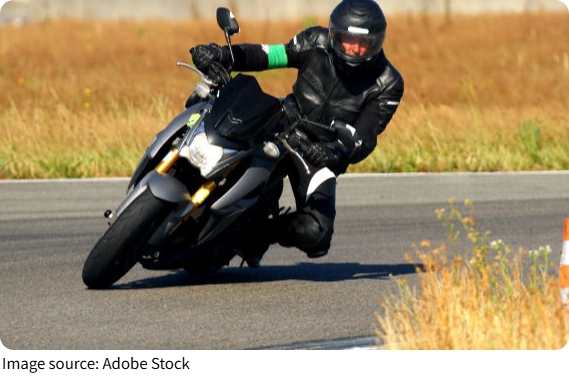
Motorcycle safety technology is evolving quickly, focusing on improving awareness, reducing reaction time delays, and supporting riders in complex traffic conditions. These systems are not about replacing the rider’s control, but about adding an extra layer of protection in critical moments.
The road ahead is still about freedom—but with smarter support systems making that freedom safer than before.