Cats as Companions

Mason O'Donnell
| 15-09-2026
 · Animal Team
Cats have a distinctive place among companion animals. Their expressive body language, individual personalities, playful habits, and interest in their surroundings make everyday life with them engaging and rewarding.
Rather than behaving according to one predictable pattern, cats develop individual preferences that become familiar over time.
Understanding these characteristics allows caregivers to appreciate cats as individual animals and create an environment that supports their natural behaviors.
Individual Personalities
No two cats are exactly alike. Some are outgoing and enjoy frequent interaction, while others are quieter and prefer greater independence. Temperament, early experiences, socialization, environment, health, and life stage can all influence how a cat behaves.
Cats can also express affection differently. One may seek attention or sit beside a caregiver, while another may show interest by following someone through the home or choosing to rest nearby. Recognizing these differences is an important part of understanding a cat.
How Cats Communicate
Much of feline communication happens without words. Ear position, tail movement, posture, eye direction, vocalizations, and movement can provide clues about a cat's preferences and level of comfort.
For example, a cat may approach when it wants interaction or move away when it prefers space. Observing these signals helps caregivers respond appropriately rather than assuming that every cat enjoys the same type of contact.
A suitable home environment can further support natural behavior by providing comfortable resting areas, hiding places, scratching surfaces, elevated spaces, play opportunities, and an appropriate litter area.
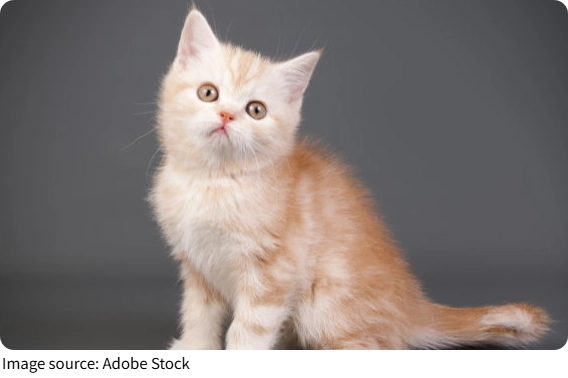
Curiosity and Exploration
Cats are naturally interested in changes around them. New objects, sounds, scents, and spaces can encourage investigation and exploration.
This curiosity can be supported through simple forms of enrichment. Food puzzles, interactive toys, climbing opportunities, and safe areas to investigate give cats ways to explore their surroundings and make choices.
The most suitable activities depend on the individual cat. Some may prefer interactive games, while others may be more interested in climbing, observing, searching, or exploring independently.
The Role of Play
Play gives cats opportunities to move, investigate, and engage with their environment. It can also provide variety within their daily routine.
Interactive toys and suitable scratching and climbing options can encourage natural activities. Offering different choices allows cats to discover which forms of play they prefer instead of expecting one activity to suit every cat.
Regular opportunities for play and exploration can make the home environment more engaging and provide meaningful daily activity.
Building Companionship
Companionship with a cat often develops through ordinary moments. A cat may greet its caregiver, settle into a favorite place nearby, participate in play, or simply share a quiet room.
Close interaction is not the only expression of companionship. Some cats enjoy frequent contact, while others are happiest remaining nearby. Respecting these differences helps create a relationship based on familiarity and mutual comfort.
Patience and consistency are particularly valuable as caregivers learn the cat's routines and preferences.
Getting to Know Your Cat
Observation is one of the best ways to understand an individual cat. Paying attention to favorite resting areas, preferred activities, communication signals, and daily routines can reveal patterns that make the cat easier to understand.
This knowledge also helps caregivers provide more suitable enrichment and arrange the home around the cat's needs.
The goal is not to fit every cat into the same idea of a pet. It is to recognize the individual character of the animal and allow its preferences to become part of everyday life.

A Distinctive Companion
Cats bring individuality, curiosity, communication, and play into the home. Their personalities become clearer through observation, while thoughtful enrichment gives them opportunities to explore and engage with their surroundings.
A rewarding relationship develops when caregivers understand feline behavior, respect individual preferences, and provide an environment suited to the cat's needs. In this way, everyday companionship becomes an opportunity to appreciate what makes each cat unique.