Healthy Salads Guide

Finnegan Flynn
| 16-09-2026
 · Food Team
Salads can be an easy way to make vegetables a regular part of everyday meals.
A thoughtfully prepared salad can combine fresh produce with legumes, nuts, seeds, or avocado to create a dish with contrasting textures, appealing flavors, and a useful range of nutrients.
There is no single formula for a healthy salad. Choosing different ingredients and paying attention to portions can make salads enjoyable while supporting an overall nutritious eating pattern.
Leafy Green Salads
Lettuce, spinach, kale, and arugula provide a versatile foundation for salads. Their flavors and textures range from mild and crisp to peppery and hearty, making it easy to create different combinations.
Dark leafy greens can also contribute fiber, vitamins, minerals, and naturally occurring plant compounds.
Cabbage Salads
Cabbage brings a crisp texture and fresh flavor to salads. Green and purple varieties can both be shredded and combined with ingredients such as carrots, cucumber, peppers, and herbs.
Because cabbage holds its texture well, it can also work particularly well in salads prepared ahead of time.
Tomato and Cucumber Salads
Tomatoes and cucumbers create a simple combination with contrasting textures. Tomatoes provide vitamin C, potassium, and carotenoids, while cucumbers contribute water and a refreshing crunch.
Fresh herbs, leafy greens, or other vegetables can be added according to preference.
Carrot-Based Salads
Carrots provide fiber and beta-carotene. The body can convert beta-carotene into vitamin A, which is important for normal vision and immune function.
Grated or thinly sliced carrots are easy to combine with cabbage, leafy greens, cucumber, or other vegetables.
Bean and Chickpea Salads
Beans and chickpeas can give a salad greater substance by providing plant protein and dietary fiber. They can be combined with vegetables and herbs to create a satisfying plant-based meal.
They are especially useful when you want a salad to serve as more than a light side dish.
Avocado and Vegetable Salads
Avocado adds a creamy texture and provides fiber along with a range of important nutrients. A moderate portion can complement crisp vegetables while making the salad more satisfying.
It pairs well with tomatoes, cucumber, leafy greens, and other fresh produce.
Nutritious Toppings
Toppings can add texture and nutritional value without requiring a complicated recipe. Nuts and seeds can contribute unsaturated fats and other nutrients, while beans and chickpeas provide plant protein and fiber.
Since nuts, seeds, and some toppings are energy-dense, using moderate portions helps maintain the balance of the dish.
Choosing the Right Dressing
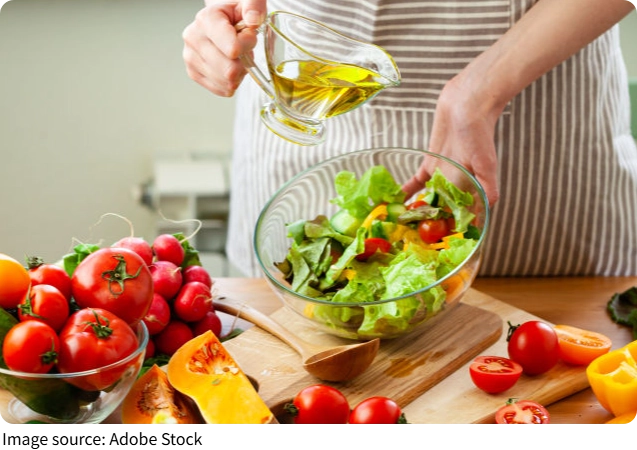
Dressing can strongly influence the overall nutritional profile of a salad. Simple combinations using ingredients such as olive oil, vinegar, lemon juice, herbs, or spices can add flavor while allowing you to control the amount used.
For packaged dressings, checking the serving size and nutrition information can help you make an informed choice, particularly when monitoring added sugar or sodium.
Why Variety Matters
Different vegetables provide different combinations of nutrients, so changing salad ingredients can make meals more interesting and nutritionally diverse.
“Eat a variety of foods daily: vegetables, fruits, legumes, nuts and whole grains.” — World Health Organization.
For salads, this can mean combining different vegetables with legumes, nuts, seeds, or other nutritious ingredients rather than relying on the same combination every time.
Salads Within a Balanced Diet
Salads are one part of healthy eating rather than a complete diet on their own. A nutritious eating pattern can include vegetables, fruits, whole grains, legumes, nuts, seeds, and other wholesome foods.
A salad can therefore be adapted to different meals and preferences. Adding a source of plant protein or other nutrient-rich ingredients can make it more substantial while keeping the focus on fresh, wholesome foods.
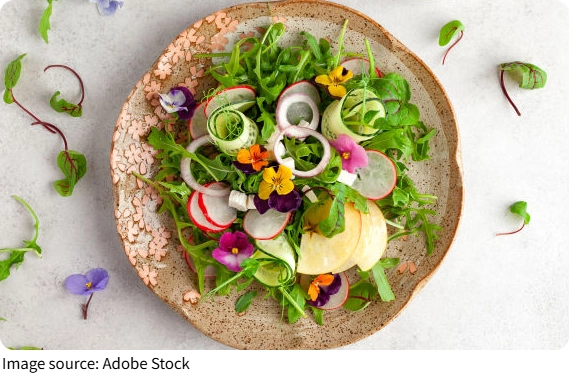
A healthy salad does not need to be elaborate. Fresh vegetables can provide the foundation, while legumes, avocado, nuts, seeds, and a carefully chosen dressing can add substance, texture, and flavor.
By changing ingredients regularly and keeping portions appropriate, salads can remain an enjoyable and practical part of a nutritious everyday eating pattern.